
Early Warning Signs of Diabetes, Essential Precautions & Self-Check
Diabetes develops subtly over months or years. Recognizing your body's early warnings gives you the power to reverse prediabetes, protect vital organs, and prevent long-term complications.
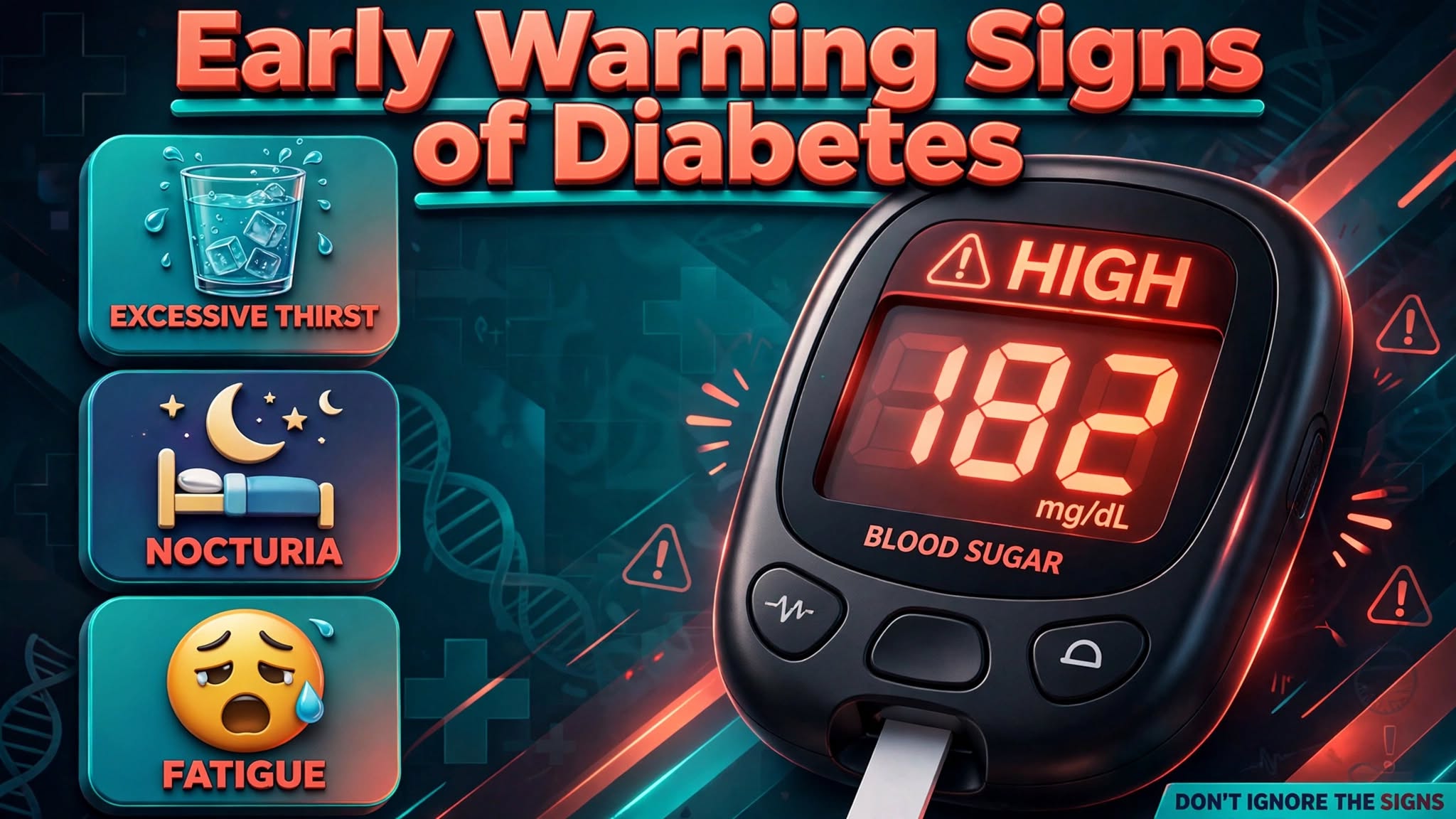
Quick Answer: Early Warning Signs & Precautions
The core early indicators of diabetes are excessive thirst (Polydipsia), frequent nighttime urination (Polyuria), uncontrolled hunger (Polyphagia), and chronic fatigue. Essential daily precautions include eating high-fiber low-GI meals, conducting daily foot checks to stop ulcers, testing glucose regularly, staying active for 150 min/week, and attending annual kidney/eye screenings.
Interactive Self-Assessment: Check Your Symptoms
Select any symptoms you have noticed recurring over the past few weeks:
1. The Classic "3 Ps" of Diabetes
Polydipsia
Excessive Thirst: Kidneys draw fluid from surrounding tissues to flush out surplus glucose, triggering constant thirst.
Polyuria
Frequent Urination: Higher filtration rate causes frequent bathroom visits, especially nighttime awakenings.
Polyphagia
Constant Hunger: Cells cannot access energy from glucose due to insulin resistance, sending hunger signals to the brain.
2. Secondary Early Red Flags
- Chronic Fatigue & Low Energy Cells lack sufficient glucose for ATP production, causing lethargy regardless of sleep quality.
- Blurry Vision Elevated glucose pulls fluid into eye lenses, causing swelling and altered optical focus.
- Tingling or Numbness (Peripheral Neuropathy) Prolonged high glucose damages nerve endings, causing burning or "pins and needles" in hands and feet.
- Slow Healing Cuts & Sores Impaired circulation and subdued immune response delay natural wound repair mechanisms.
- Darkened Skin Folds (Acanthosis Nigricans) Velvety, dark hyperpigmentation around the neck, armpits, or groin indicating high insulin resistance.
3. Essential Daily Precautions
1. Daily Foot Inspection
Nerve damage dulls sensation. Check feet daily for cuts, blisters, redness, or cracks. Never walk barefoot indoors or outdoors.
2. Dietary & Carb Control
Cut refined sugars and sweetened drinks. Emphasize low-glycemic, fiber-dense vegetables, whole pulses, and lean proteins.
3. Routine Glucose Tracking
Log both fasting and post-prandial levels. Keep track of specific foods or stress triggers that produce glucose spikes.
4. Structured Physical Activity
Dedicate 30 minutes daily to moderate exercise (brisk walking, cycling, resistance training) to open non-insulin glucose pathways.
5. Emergency Hypo Preparedness
Carry 15g of fast-acting carbohydrates (3 glucose tabs or half a cup of juice) if on insulin or sulfonylurea therapy.
6. Routine Preventive Tests
Schedule an annual dilated eye check (retinopathy), kidney profile (eGFR/Microalbumin), and HbA1c panels every 3 months.
Type 1 vs. Type 2 Diabetes Comparison
| Attribute | Type 1 Diabetes | Type 2 Diabetes |
|---|---|---|
| Onset | Rapid (days to weeks) | Gradual (months to years) |
| Weight Trend | Rapid, unexplained loss | Gradual weight gain or steady |
| Pathology | Autoimmune beta-cell destruction | Progressive insulin resistance |
| Primary Management | Daily insulin replacement | Diet, exercise, oral meds ± insulin |
Frequently Asked Questions (FAQ)
What are the earliest warning signs of diabetes?
What are the most critical precautions for a diabetic patient?
Can prediabetes be reversed naturally?
What is a normal fasting blood sugar vs diabetic range?
Why is daily foot care so important in diabetes?
When to Check with a Doctor
If you experience persistent thirst, nocturia, or chronic fatigue, ask your doctor for a standard metabolic screening (Fasting Blood Glucose & HbA1c). Identifying elevated glucose early prevents vascular and neurological complications.